Territorial Control
Territorial control is the fundamental basis of power for individuals, states, and corporations throughout history. Acquiring territory is often achieved through pure military might by states or by spending capital by individuals and corporations; however, at times, more unusual practices occur.
The common justification for territorial control is often historical, referencing countless generations of ancestors tilling the soil, or brave soldiers spilling their blood on the battlefield, exemplified by the Nazi concept of 'Blut und Boden'. I am interested in the more unusual methods and justifications used to claim land.
The North Pole (Russia)
In 2007, Russia planted a titanium flag on the seafloor of the North Pole. Two mini-subs, Mir-1 and Mir-2, placed the one-metre-high flag at a depth of 4,300 metres on the underwater Lomonosov Ridge, which Russia claims is a direct extension of its continental shelf. If Russia’s claim is approved by the UN, the country could gain rights over estimated supplies of 10 billion tonnes of oil and gas. As the Arctic ice cap melts due to our combustion of fossil fuels, the exploration and drilling of new reserves become increasingly accessible.
The Spratly Islands (China)
The Spratly Islands are a group of coral reefs in the South China Sea, located in the world’s busiest shipping lane and an area rich in fish, oil, and gas. While several countries with nearby landmasses—the Philippines, Taiwan, and Vietnam—occupy various natural islands, China bases its claim on a 1947 map featuring the 'Nine-Dash Line'.
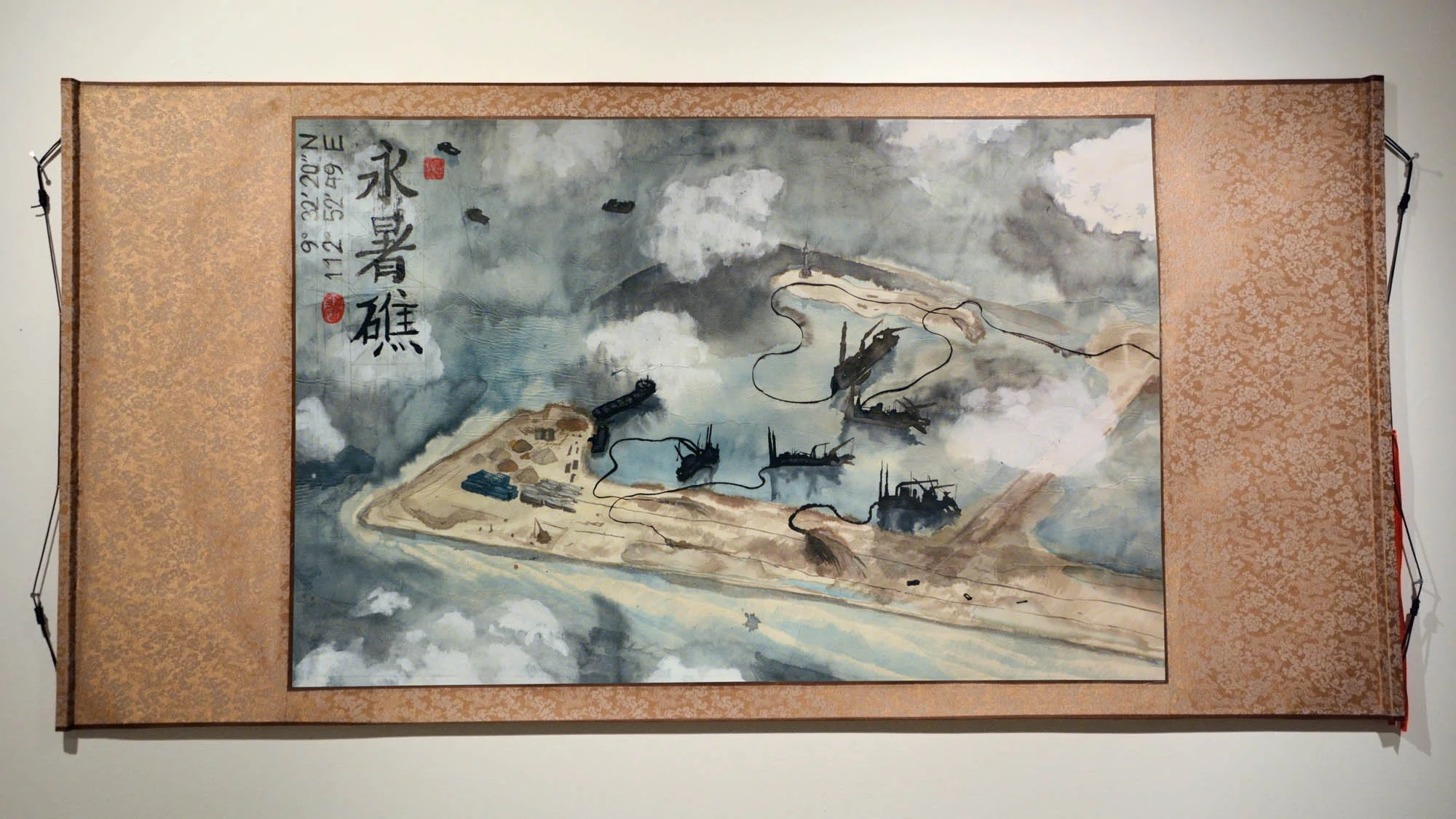
Since 1987, China has transformed small outposts into massive artificial islands. By June 2015, China had created 13 million square metres of land across seven submerged reefs, Cuarteron Reef, Fiery Cross Reef, Gaven Reef, Hughes Reef, Johnson South Reef, Mischief Reef and Subi Reef. This have been aptly called the 'Great wall of Sand'.
In 2016, the Permanent Court of Arbitration (PCA) ruled that China had no legal basis for these historic rights and that the "islands" were legally mere rocks, not entitled to an Exclusive Economic Zone (EEZ). The court also noted severe harm to the coral environment. I believe the strategy behind these artificial islands is to present the world with a 'fait accompli': a physical Chinese presence that would be impossible to remove without outright war. These sites are equipped with deep-sea harbours, landing strips, and military fortifications reminiscent of Nazi German 'Flaktürme' (flak towers) designed to deny foreign powers the surrounding airspace. To further legitimise the claim, they have raised monuments, greenhouses, and fish farms, hosting grand celebrations to weave these artificial structures into a national narrative.
Post-Truth
In a post-truth world where traditional warfare between sovereign nations is often deemed unthinkable, we see a shift toward low-intensity conquest. US drone strikes, Russian 'little green men', land grabbing in Africa, and the 'Great Wall of Sand' represent a new era where propaganda, wit, and myth are as vital as they were for Queen Dido 2,800 years ago.
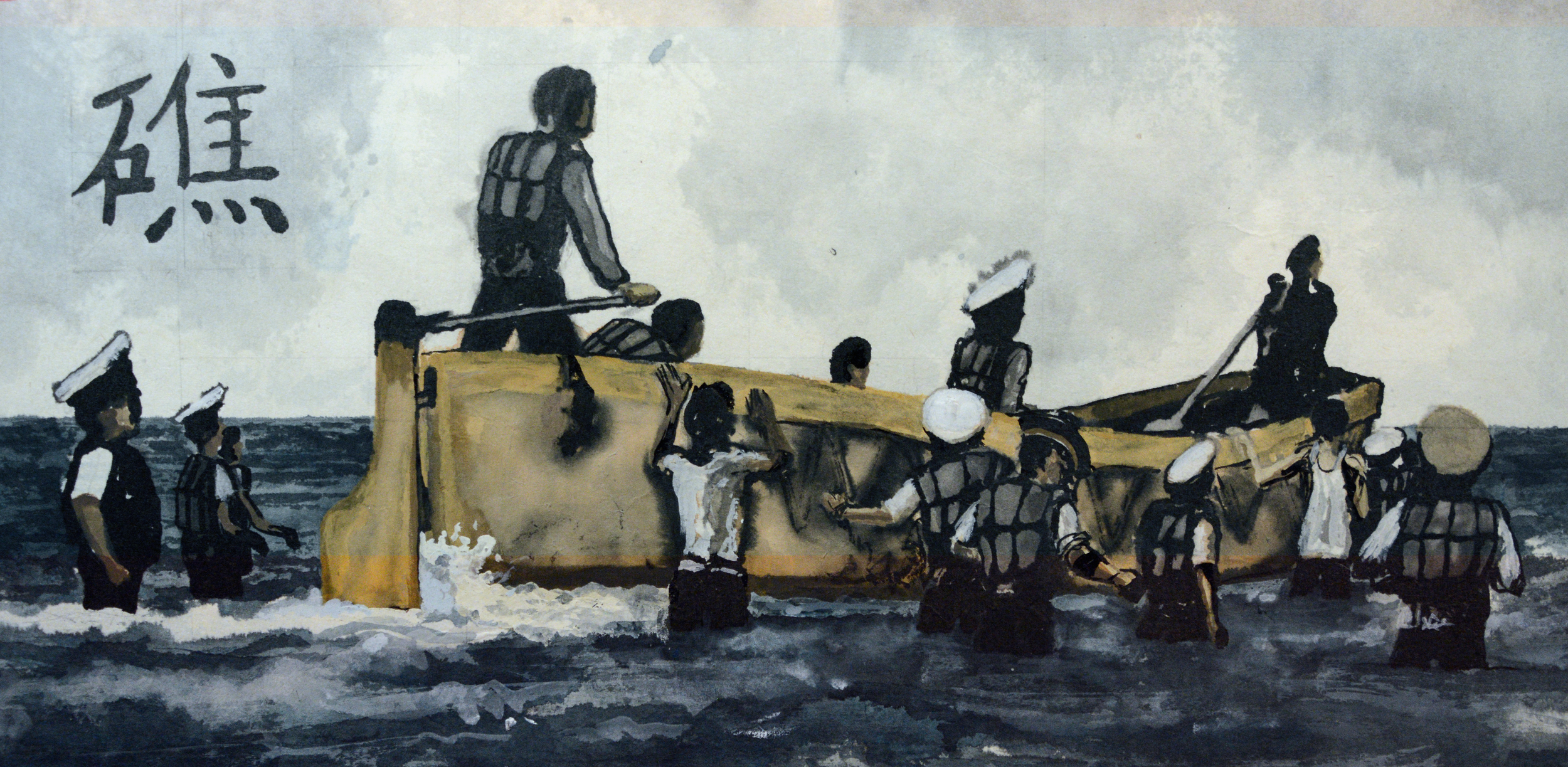
In this project, I have portrayed these territorial claims in artistic styles reminiscent of the classical and folk art of the claiming nations. This connects the claims to national mythos while contrasting them with the artificial nature of the acquisition. Russian folk art celebrates mythological knights and intricate floral patterns often found on wooden utensils; Chinese ink landscapes celebrate the tranquillity of ancient hills and the beauty of unspoiled nature—imagery that stands in stark contrast to the industrial reality of modern territorial expansion.
Inquiry
This is a unique physical work. For inquiries regarding acquisition or exhibition, please use the contact form in the About section. They can be purchased in my store directly, here.
Related Works:
»Territorial Control - Hughes Reef «
2016
Nikolaj Jesper Cyon
Material: Chinese ink and watercolour on Mulberry paper, mounted on Silk brocade.
Size: 144 × 69 cm.
»Territorial Control - Johnson South Reef «
2016
Nikolaj Jesper Cyon
Material: Chinese ink and watercolour on Mulberry paper, mounted on Silk brocade.
Size: 144 × 69 cm.
»Territorial Control - Fiery Cross Reef «
2016
Nikolaj Jesper Cyon
Material: Chinese ink and watercolour on Mulberry paper, mounted on Silk brocade.
Size: 144 × 69 cm.
»Territorial Control - North Pole «
2016
Nikolaj Jesper Cyon
Material: Acrylic and varnish on pine wood.
Size: 18 × 27 × 2.5 cm.
»Territorial Control - Cuarteron Reef «
2014
Nikolaj Jesper Cyon
Material: Chinese ink and watercolour on Mulberry paper, mounted on Silk brocade.
Size: 144 × 69 cm.
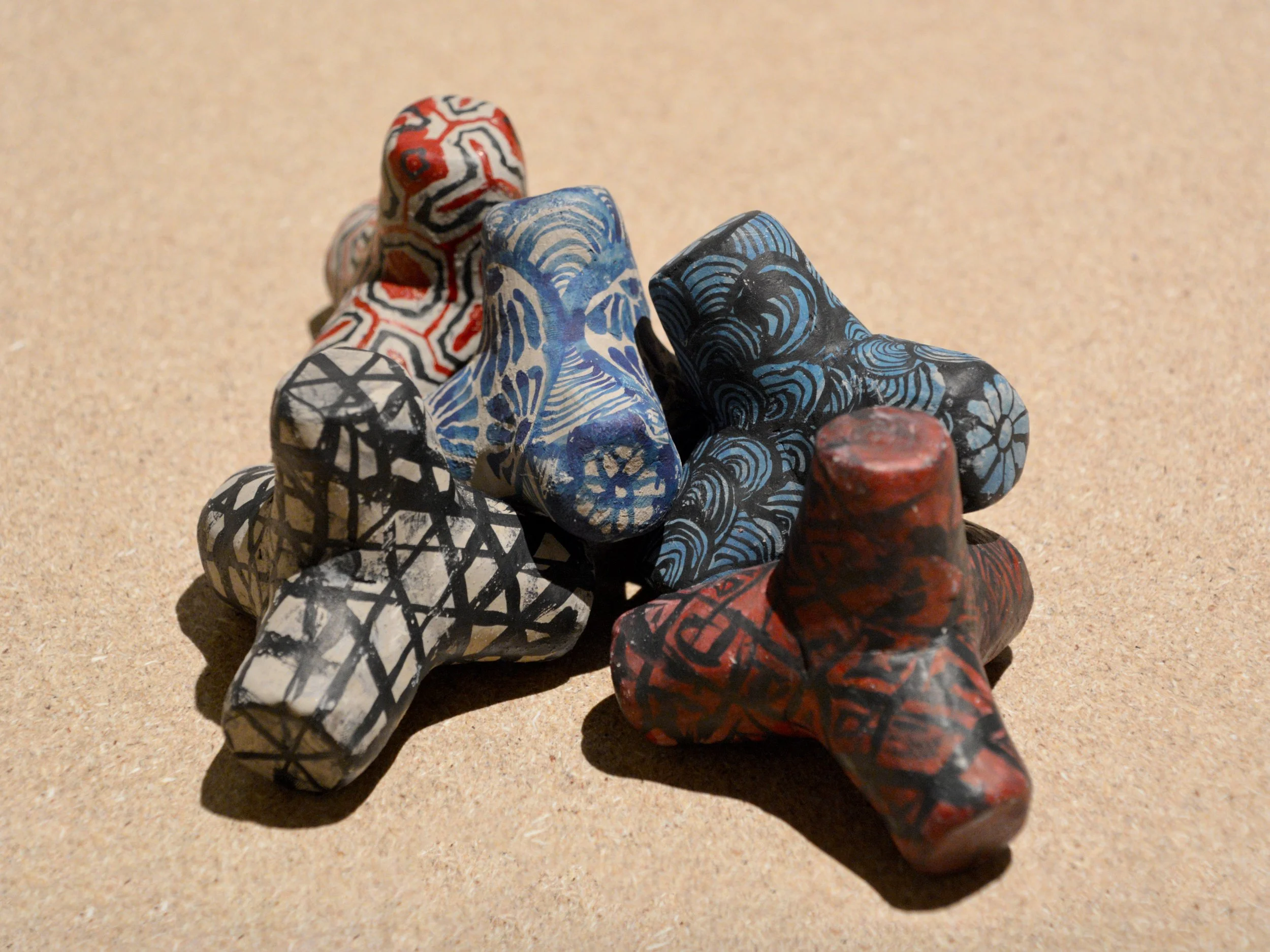
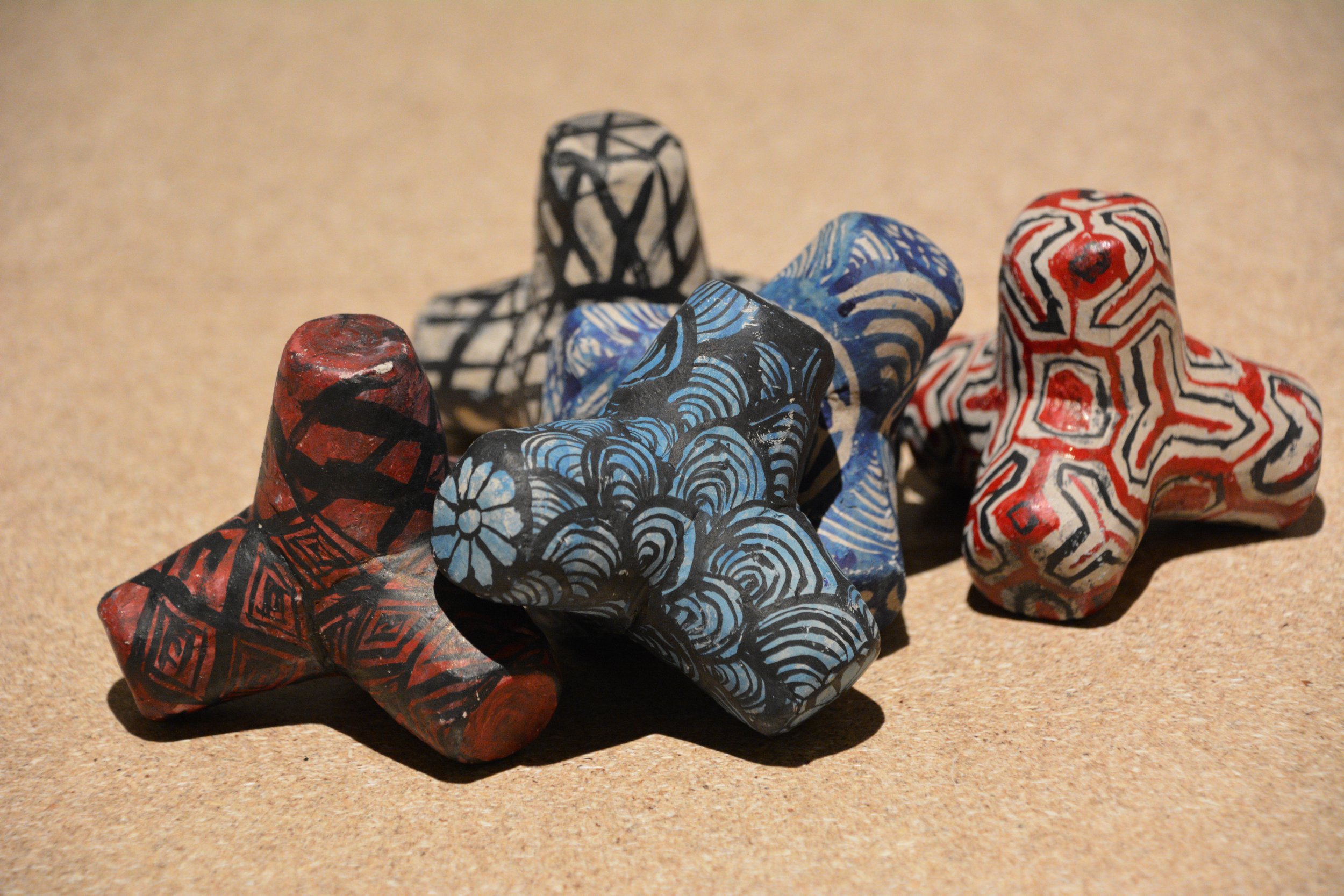
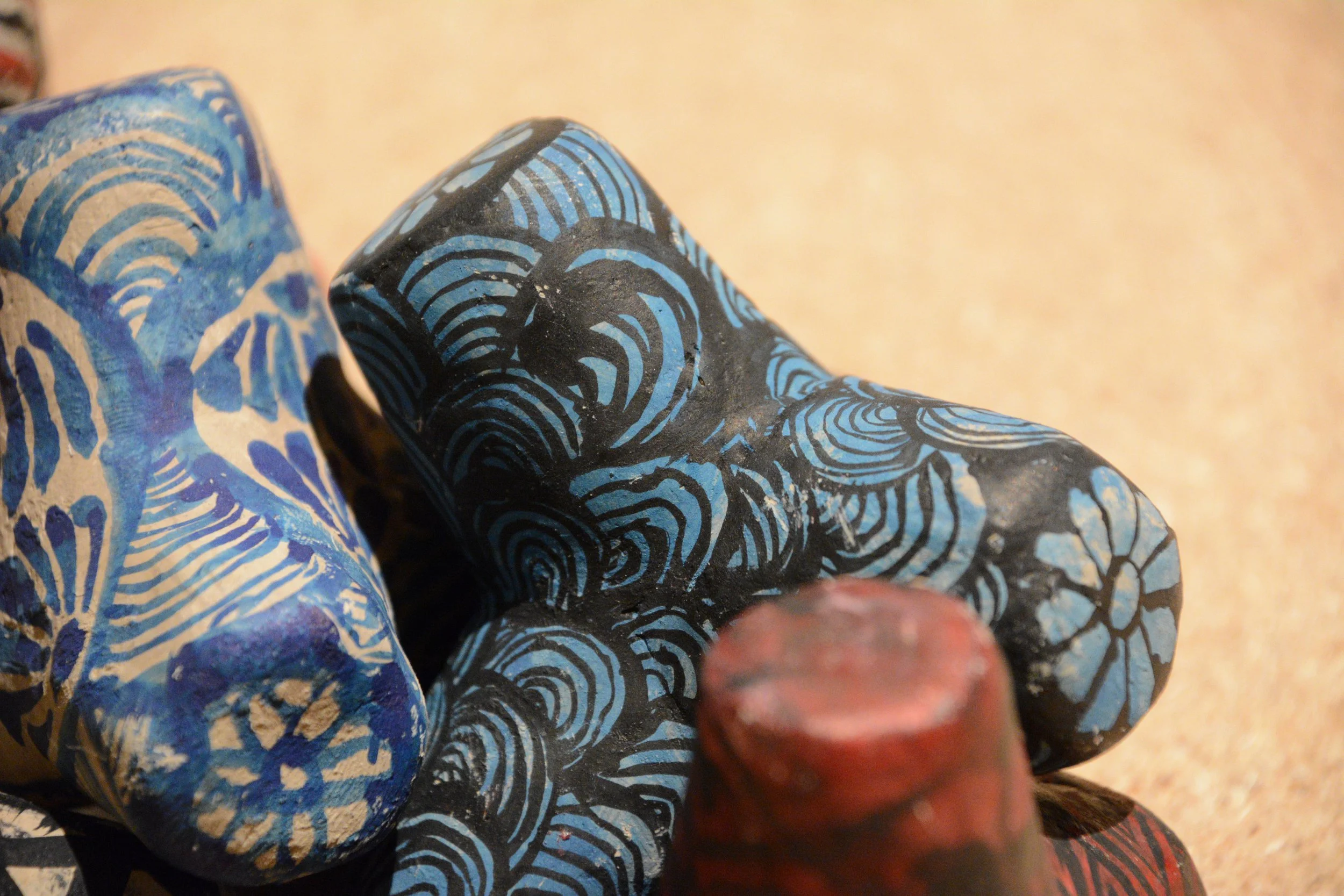
»Territorial Control - Tetrapod «
2016
Nikolaj Jesper Cyon
Material: Akrylic, marker and varnish, on Air-drying clay.
Size: Five 10 × 10 × 10 cm.


![[Detail] Territorial Control - Hughes Reef (2015) (Copy)](https://images.squarespace-cdn.com/content/v1/583707079de4bbe7abb0e5a1/1480344227820-J1GI2RGYDTXC9RYVCLAN/Detail+-Territorial+Control++-Hughes+Reef.jpg)

![[Dertail] Territorial Control - Cuarteron Reef (2016) (Copy)](https://images.squarespace-cdn.com/content/v1/583707079de4bbe7abb0e5a1/1480344225457-X4HRXT3QJU1U3C331VCU/Detail+-Territorial+Control++-+Cuarteron+Reef+2.jpg)
![[Detail] Territorial Control - Cuarteron Reef (2016) (Copy)](https://images.squarespace-cdn.com/content/v1/583707079de4bbe7abb0e5a1/1480344225323-PCGJ1659ZROWRIVYIX1V/Detail+-Territorial+Control++-+Cuarteron+Reef+1.jpg)

![[Detail] Territorial Control - Cuarteron Reef (2016) (Copy)](https://images.squarespace-cdn.com/content/v1/583707079de4bbe7abb0e5a1/1480344227393-P1I369JCABLONOHMM7AV/Detail+-Territorial+Control++-+Scroll+edge.jpg)
![[Detail] Territorial Control - Cuarteron Reef (2016) (Copy)](https://images.squarespace-cdn.com/content/v1/583707079de4bbe7abb0e5a1/1480344226529-9SB0SAOWBQOVOFZMF8U0/Detail+-Territorial+Control++-+Johnson+South+Reef+2.jpg)
![[Detail] Territorial Control - Cuarteron Reef (2016) (Copy)](https://images.squarespace-cdn.com/content/v1/583707079de4bbe7abb0e5a1/1480344226804-TO4GIBCBA4JQNG1C3KMA/Detail+-Territorial+Control++-+Johnson+South+Reef.jpg)